Posted on — Leave a comment

How Sleep Shapes Appetite

Don’t Let a Tired Brain Go Grocery Shopping: How Sleep Shapes Appetite

Moonlit Alpine Slumber – Sleep and weight gain
A good night’s sleep is important for a healthy body weight. Image by Carl Scott Harker .

At 10:30 at night, does your kitchen call to you? The crackers with a little peanut butter look appealing. The leftover pie, is winking, just a sliver would be okay… You may not be physically ravenous, yet you are tired, still awake, and standing three steps from food that that would be easy to eat, in the moment.

Fatigue can lead to poor decisions. Although not every evening snack is a mistake, being sleepy and tired does make it easier to add more calories than you want take in each day. This why the subject of sleep belongs in a sensible discussion about appetite and weight. Eating is influenced by biology, habit, opportunity, stress, food availability, and pleasure. Sleep, or lack thereof, can nudge several of those urges at once.

Being short on sleep is hardly a rare problem. In the 2024 National Health Interview Survey, 30.5 percent of U.S. adults reported sleeping less than seven hours in an average 24-hour period. The American Academy of Sleep Medicine recommends at least seven hours for adults, although individual needs and the ranges commonly given to different age groups vary. Sleep quality matters too: seven hours broken into a collection of small, unsatisfactory installments may not leave a person refreshed. The National Center for Health Statistics reported these findings in April 2026.
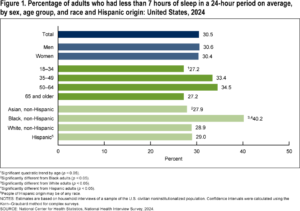
Bar chart showing the percentage of U.S. adults who reported sleeping fewer than
In the 2024 National Health Interview Survey, 30.5 percent of U.S. adults reported sleeping fewer than seven hours in an average 24-hour period. • National Center for Health Statistics, Figure 1 in Short Sleep Duration and Sleep Difficulties Among Adults: United States, 2024 by Amanda E. Ng, Lindsey I. Black, and Dzifa Adjaye-Gbewonyo

What happens to appetite when sleep is shortened? Experimental studies give us more useful evidence than anecdotal observation that tired people and weight gain often go together. A 2019 review combined 41 randomized trials in which researchers restricted sleep and measured metabolic outcomes. On average, sleep restriction increased reported hunger by 13.4 points on a 100-point scale and energy intake by about 253 calories per day. The experiments also found altered brain responses to food cues, while changes in the appetite-related hormones leptin and ghrelin were not consistent. The review appeared in “Sleep Medicine Reviews”.

That last detail is important. Why less sleep causes people to eat more is not a sikmple mechanism of two hormones.
while popular explanations often introduce ghrelin as the hunger hormone, leptin as the fullness hormone, and then announce that a bad night simply turns one up and the other down, studies do not support this theory. Those hormones are real, but the human appetite system is not a pair of faucet handles. A 2026 synthesis of randomized human studies found that people often ate more after sleep restriction without corresponding increases in reported appetite or motivation to eat. In other words, the extra food cannot be, generally explained by feeling noticeably hungrier. The authors urged a broader view of the pathways involved.

Consider the ordinary causes of food gains when sleep loses. Being awake longer creates more time in which to eat. Fatigue can make planning, cooking, and resisting an easy impulse more difficult. Food rewards may attract more attention, and a tired person may reach for quick energy or comfort foods. Then there is the following morning, when a sluggish brain from lack of sleep decides against a healthy breakfast and the rest of the day your body is demanding balance through overeating. The automatic systems of our bodies are complicated and getting enough sleep each day makes it easier for those systems to stay in balance with the bodies actual needs.

A Related Book


The Sleep Prescription: Seven Days to Unlocking Your Best Rest by Aric A. Prather, PhD
Available on Barnes & Noble

This book presents a short, approachable program for improving sleep habits. It is a useful companion for readers who want to work on sleep itself.

Researchers have also asked this practical question: If short sleepers sleep longer, do they eat differently? It seems so. In a 2022 randomized trial studied 80 adults aged 21 to 40 who were overweight and usually slept less than 6.5 hours who did not have a prescribed diet or exercise plan. Half of these individuals received sleep-hygiene counseling intended to lengthen sleep. Over the two-week trial, that group slept about 1.2 hours longer per night and consumed an estimated 270 fewer calories per day than the control group. Energy intake was measured with an objective method using doubly labeled water and changes in body energy stores, not merely a food diary. The trial was published in “JAMA Internal Medicine”.

It is an intriguing result. Note that the trial was short, took place at one center, and involved a specific group of younger adults with who were short sleeping and overweight. It does not show that every additional hour of sleep erases a fixed number of calories, nor that sleeping late on Sunday cancels a week of short nights.

Other studies do support the notion that getting a longer good night sleep helps one to maintain a healthy weight. A 2026 systematic review found that behavioral sleep interventions reduced daily energy intake across five small studies. These particular sleep-extension studies did not produce a statistically significant average change in BMI, however. The review concluded that sleep care may complement, not replace, established health strategies.

The practical lesson is refreshingly obvious: treat sleep as one part of the eating environment. Do not sell the mattress and buy a smaller dinner plate, or vice versa. Regular meals, nutritious food, physical activity, medical care when needed, and sufficient sleep are all components of a healthier life.

Begin with a one-week observation rather than a sweeping reform. Each morning, record roughly when you went to bed, when you got up, whether you woke repeatedly, and how rested you feel. During the day, note unusually strong hunger, cravings, unplanned grazing, and the time they occurred. This is not a calorie ledger and should not become a source of anxiety. Its purpose is to reveal patterns: perhaps the snack cupboard becomes magnetic after nights when work stretches past midnight, or perhaps appetite is unchanged but takeout becomes more appealing because cooking feels impossible.

Next, protect a realistic sleep opportunity. Choose a reasonably consistent wake time, then work backward far enough to allow the amount of sleep you need, plus a little time to settle. For many adults, seven or more hours is an appropriate starting point. If bedtime has been very late, move it earlier by 15 or 30 minutes rather than attempting a heroic two-hour leap that ends with you staring at the ceiling and resenting the clock.

Create a cue to begin winding down. An evening alarm can be more useful than a morning alarm because it catches the decision before the next episode, chore, or internet rabbit hole begins. The CDC recommends keeping the bedroom quiet, relaxing, and cool; maintaining regular bed and wake times; turning off electronic devices at least 30 minutes before bed; avoiding large meals and alcohol before bedtime; and avoiding caffeine in the afternoon or evening. These are experiments, not moral commandments. A neighbor’s dog may not recognize your new sleep program, but the parts you control still count. [CDC summarizes these healthy-sleep habits here.](https://www.cdc.gov/sleep/about/index.html)

Poetry Connection Art Nouveau Logo

Sleeping
I love sleeping
      I love dreaming
I don’t like getting up to pee,
      but one must, sometimes,
I don’t like having a tired brain.

Often I read before bedtime,
      it’s hard to put down the book
when the action gets going, but
      I’ve learned to refrain,
the story will be there tomorrow
      and I need my sleep.

The worried brain makes it harder
      to fall – bills and social problems pile on
then I remember the Universe put me here
      – I have a purpose –
so I trust the Universe to help me, for
      every threat I feel to be resolved
every problem to have its solution,
      and let loose the contents of
my worried brain to It, tomorrow,
      will be time enough to work
on those cycling thoughts
      for I need my sleep.

The day dawns, body and brain ready,
      a good breakfast ahead,
what will survival ask of me today –
      I can’t wait!

©2026 Carl Scott Harker, publisher of

Time Slips Into History
by Jim Eridani

After a short night, make food decisions easier rather than trying to punish yourself into virtue. Eat regular, satisfying meals. Include protein- and fiber-rich foods you tolerate, and keep convenient options available: yogurt and fruit, peanut butter and whole-grain toast, soup and beans, or another combination that fits your preferences and medical needs. Pre-deciding lunch before the busiest part of the day can help when the tired brain would prefer that a cookie or a donut instead of an apple, salad and soup. If you are genuinely hungry for an evening snack, have one; the goal is to notice and support appetite, not to fear it.

Some barriers can be difficult to overcome. Shift work, caregiving, pain, menopause symptoms, noisy housing, and multiple jobs can all limit sleep. Adjust what is feasible and resist turning a structural problem into a character judgement. People who work nights may benefit from a dark, quiet daytime sleep space and professional guidance tailored to their schedule. Anyone taking a medicine or supplement for sleep should discuss benefits, side effects, and interactions with a clinician or pharmacist rather than assuming that “natural” means harmless.

Persistent sleep trouble deserves attention. Loud frequent snoring, breathing that stops and starts, gasping during sleep, morning headaches, or marked daytime sleepiness can be signs of sleep apnea. Regular difficulty falling or staying asleep may need evaluation as well. Do not drive when dangerously sleepy. A healthcare professional can look for sleep disorders and discuss effective treatment; more willpower at breakfast cannot correct an airway that repeatedly closes at night. The National Heart, Lung, and Blood Institute lists sleep-apnea symptoms and evaluation guidance.

For the coming week, choose one modest change: begin winding down 20 minutes earlier, set a consistent wake time, move afternoon caffeine earlier, or keep the brief sleep-and-appetite record. At week’s end, ask whether the change improved rest, made food decisions easier, or revealed a problem worth discussing with a professional. Sleep is not a secret diet. It is a basic biological need. A rested brain is a more patient companion for making good decisions in the kitchen.


Sources and further reading, checked October 22, 2026

– Ng, Black, and Adjaye-Gbewonyo: Short Sleep Duration and Sleep Difficulties Among Adults—United States, 2024, NCHS Data Brief No. 559, April 2026.
– CDC: About Sleep, May 15, 2024.
– Tasali and colleagues: Effect of Sleep Extension on Objectively Assessed Energy Intake, randomized clinical trial, *JAMA Internal Medicine*, 2022.
– Zhu and colleagues: Effects of Sleep Restriction on Metabolism-Related Parameters, systematic review and meta-analysis of randomized trials, *Sleep Medicine Reviews*, 2019.
– Does Sleep Curtailment Stimulate Appetite, Motivation to Eat and Dietary Intake in Humans?, systematic narrative synthesis of randomized human trials, 2026.
– Mostafa and colleagues: The Effect of Behavioral Sleep Interventions on Measures of Obesity, Dietary Intake and Physical Activity, systematic review and meta-analysis, *Obesity Reviews*, 2026.
– NHLBI: Sleep Apnea Symptoms.
Posted on — Leave a comment

Better Weeknight Meals from Beans

The Case for Beans: Better Weeknight Meals from a Humble Can

Beans, lentils, and other legumes: Everyday nutrition and food choices


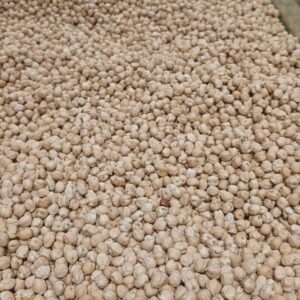
Close-up photograph of pale beige dried chickpeas filling the frame
Chickpeas are one of the pulses that can become soups, salads, and satisfying everyday meals. Dried chickpeas must be cooked before eating. • Fumikas Sagisavas, “Chickpeas (2).jpg,” Wikimedia Commons.

Picture an ordinary evening. You open the refrigerator, study its contents, close it, and open it again, hoping that dinner has arrived during the interval. There is half an onion, something leafy, and a container from sometime too way in the past. Then you remember the beans in the cupboard and your can opener,and dinner comes into focus.

Beans deserve that sort of practical affection. Black beans, chickpeas, white beans, lentils, and split peas can help turn scattered ingredients into a meal. They fit soups, salads, stews, tacos, and rice dishes, and they bring useful nutrients along. Making room for them in your weekly menus is great addition for anyone trying to eat well without turning dinner into a second occupation.

Their nutritional appeal is straightforward: beans and lentils supply plant protein and fiber, along with nutrients such as folate and iron. They also contain carbohydrates which provides energy. [1]

Fiber is carbohydrate that our digestive enzymes do not fully break down. Different fibers behave differently, but getting enough fiber in your diet is invaluable for healthy, comfortable bowel movements. Sometimes undigested carbohydrates reaches the large intestine, where resident bacteria breaks it down. Those good microbes are part of your normal digestion. Not only helping you get more nutrition from the foods you eat, but often manufacturing, in your gut, nutrients your body cannot get otherwise. Hurrah for good bacteria! Although their work sometimes announces itself rather more publicly than the cook intended through the releases of gases. [3,4]

What about weight? A 2016 systematic review combined 21 randomized trials involving 940 adults. Diets containing whole pulses (a term for edible dried seeds of certain legumes, including dried beans, chickpeas, lentils, and dried peas) produced an average weight decrease of about three-quarters of a pound (0.34 kilograms) compared with the comparison diets, over a median of six weeks. Typical pulse intake was about one serving daily. That is a modest finding from relatively short studies, with uncertainty about lasting effects. It cannot predict what will happen to an individual reader. [2]

How can beans change the meal you actually eat. You might replace some ground meat in chili with beans, or put chickpeas into a lunch salad. These are ways to change a meal’s ingredients and texture. Adding beans on top of an already adequate meal does not automatically create a calorie deficit, and a meal’s overall ingredients still matter.

Start with a meal you already like. If tacos are part of your regular meals, use warm black beans with cumin instead of meat (or with less meat), then serve them with the usual tortillas, vegetables, and toppings. If pasta is used in a weekly dinners, stir white beans and spinach into the tomato sauce. Adding different beans into familiar dishes gives the unfamiliar ingredient a chance to be accepted by you and your family.

For an especially easy skillet meal, soften a chopped small onion in a little olive oil. Add a drained, rinsed can of white beans, a can of no-salt-added diced tomatoes, and a pinch of dried oregano. )Spice to your own tastes.) Simmer until the onion is tender and the mixture is hot, then stir in a few handfuls of spinach until wilted. Finish with lemon juice and pepper. Serve with whole-grain toast, choosing a portion that suits your appetite.

Another evening, mash chickpeas with a fork, add chopped celery and a spoonful of plain yogurt or tahini, then season with lemon and herbs. Use it in a sandwich or alongside vegetables and crackers. Lentils offer another route: cook them according to their package directions, then fold them into a vegetable soup or a warm grain salad. These are starting points, open to whatever your cupboard and preferences permit.

Canned beans are useful when time and energy are scarce. Compare sodium on labels using the same serving size, and look for low-sodium or no-salt-added versions when available. Buy organic when possible. Draining and rinsing ordinary canned beans removes some sodium, too. You can build flavor with garlic, smoked paprika, citrus, vinegar, or herbs. Convenience deserves a place in a menu plans intended for actual weekdays. [5]

Dried beans can make sense when their price and cooking requirements suit you. Compare the cost of the cooked amount you will actually use, remembering that dried beans expand during preparation. An unopened bag in the pantry is less helpful if it sits untouched. Cook beans in advance when you have the chance and freeze portions for future meals. Lentils often offer a convenient middle ground; many varieties cook without soaking, but follow the package instructions.

A Related Book


The Bean Book: 100 Recipes for Cooking with All Kinds of Beans, from the Rancho Gordo Kitchen [A Cookbook] by Steve Sando, with Julia Newberry
Available on Barnes & Noble

Great recipes to discover in this book about cooking all kinds of beans

Give dried kidney beans particular care. Raw or undercooked kidney beans contain high levels of a lectin, a protein that can cause food poisoning. FDA advises soaking them for at least five hours, discarding that water, then boiling in fresh water for at least 30 minutes; continue cooking until fully tender. Do not rely on a slow cooker alone to make raw kidney beans safe. Canned kidney beans have already been cooked. [6]

If beans are new to your routine, introduce them gradually. Try a few tablespoons with a meal, repeat an amount that feels comfortable, and increase slowly rather than launching directly into enormous bowls. This is a suggested experiment in tolerance, not a prescribed medical dose. NIDDK recommends adding dietary fiber a little at a time so your body can adjust. [3]

Drink fluids regularly as well; they help fiber do its work. Your needs depend on health, activity, and circumstances, so there is no need to force a fashionable gallon into the day. If you have been told to restrict fluids, follow your own care plan. Paying attention to how much and when you drink water is very important. Notice how comfortable your body is while eating and digesting. Your body wants to give you its best and will tell you when it is not getting the best in food and exercise. [3]

Some people continue to have troublesome bloating or pain despite small portions. Irritable bowel syndrome and other digestive conditions can change how certain carbohydrates are tolerated. A registered dietitian can help identify suitable foods and amounts without unnecessarily shrinking your whole diet. Persistent or suddenly changed symptoms, especially with abdominal pain, diarrhea, constipation, or unintentional weight loss, deserve a conversation with a clinician. [4]

Individual medical plans still apply. If kidney disease has led to potassium, phosphorus, or protein limits, ask your kidney dietitian how beans fit your particular plan. Kidney disease does not create one universal food list: needs vary with kidney function, blood tests, and treatment. A known allergy to a particular legume also takes priority over any general recommendation to eat it. [7]

Make the next meal easier while preparing this one. Refrigerate leftover cooked beans promptly in shallow containers, within two hours—or one hour if the surroundings are hotter than 90°F. Use refrigerated leftovers within three to four days, or freeze portions you will not use in that time. Labeling the container takes a moment and prevents next week’s long archaeological expedition at the back of the refrigerator. [8]

Want to start adding beans this week? Choose one variety and two meals in which to use it. That might mean chickpea sandwiches on Tuesday and chickpeas stirred into soup on Thursday, using smaller amounts initially if necessary. Put the relevant ingredients together on your shopping list. Keeping the plan specific makes it easier to carry out when evening arrives and your enthusiasm has already changed into slippers.

Judge the experiment by ordinary evidence from your own kitchen: Did you enjoy the meal? Was preparation manageable? Did the portion feel comfortable? Would you make it again? Adjust the seasoning, texture, or amount as needed. A healthy eating habit has a better chance of staying when it produces a dinner you look forward to, with enough left over to answer tomorrow’s question.


Sources and further reading for this article.

(Evidence and links checked October 15, 2026. Numbered references correspond to the citations in the article.)

Poetry Connection Art Nouveau Logo

Beans
“Beans, beans the musical fruit
      the more you eat, the more you toot.”
is a humorous refrain
      that lingers from my juvenile brain.

And it is true after eating beans, alas
      you are more likely to pass gas
or if I can say it in this form of art
      eating beans may make you fart.

Certain carbohydrates in the beans
      are manna to good gut bacteria
and they produce the vapors
      that squeak out of our posteriors.

But humorous releases are outweighed
      by the simple values of nutrition
Fiber, protein, vitamins, and more each day
      make beans a perfect meal addition.

©2026 Carl Scott Harker, publisher of

Time Slips Into History
by Jim Eridani

1. USDA: eatured Food: Beans, in “USDA Foods from Farm to Plate”, February 29, 2016. Protein, fiber, iron, folate, practical uses, and classification in MyPlate vegetable and protein food groups.

2. Kim SJ and colleagues: Effects of dietary pulse consumption on body weight: a systematic review and meta-analysis of randomized controlled trials “American Journal of Clinical Nutrition”, 2016;103:1213–1223. Whole-pulse trials; median duration six weeks; mean difference −0.34 kg (95% confidence interval −0.63 to −0.04 kg).

3. NIDDK (National Institute of Diabetes and Digestive and Kidney Diseases): Eating, Diet, & Nutrition for Constipation, last reviewed May 2018. Gradual fiber increases and appropriate fluids. National Institute on Aging: Know Your Food Groups also explains dietary fiber and plant protein.

4. NIDDK: Symptoms & Causes of Gas in the Digestive Tract, last reviewed June 2021. Bacterial carbohydrate digestion, symptoms, and when to seek care.

5. FDA: Sodium in Your Diet. Label comparisons, no-salt-added products, and rinsing canned foods.

6. FDA: Natural Toxins in Food, section on beans; Bad Bug Book, second edition, section on phytohaemagglutinin, including slow-cooker precautions.

7. NIDDK: Healthy Eating for Adults with Chronic Kidney Disease. Individualized potassium, phosphorus, and protein needs.

8. USDA Food Safety and Inspection Service: Prompt cooling, refrigeration, and storage times.