Posted on — Leave a comment

Tai Chi Slow Moves, Steadier Day

Tai Chi for Beginners: Slow Moves, Steadier Days

Tai chi for beginners—sequences, breathing, and mindful movement.

Imagine arriving at an exercise class where nobody urges you to beat yesterday’s record. The instructor asks you to soften your shoulders, shift your weight, and pay attention to your feet. Somewhere outside, a car alarm is conducting its own less peaceful exercise program. But inside, you have one manageable job: notice how you move. For someone trying to become more active, that is an inviting beginning.

Tai chi originally developed as a Chinese martial art, but is now a world-wide-physical well being system. Tai chi health-focused classes teach linked movements performed slowly, with attention to posture, breathing, and concentration. A “form” simply means an arranged sequence of movements. You learn the pieces, then how they fit together. There is no requirement to arrive flexible, athletic, or already serene. So few of us are serene and becoming so is a major attraction of tai chi. [1]

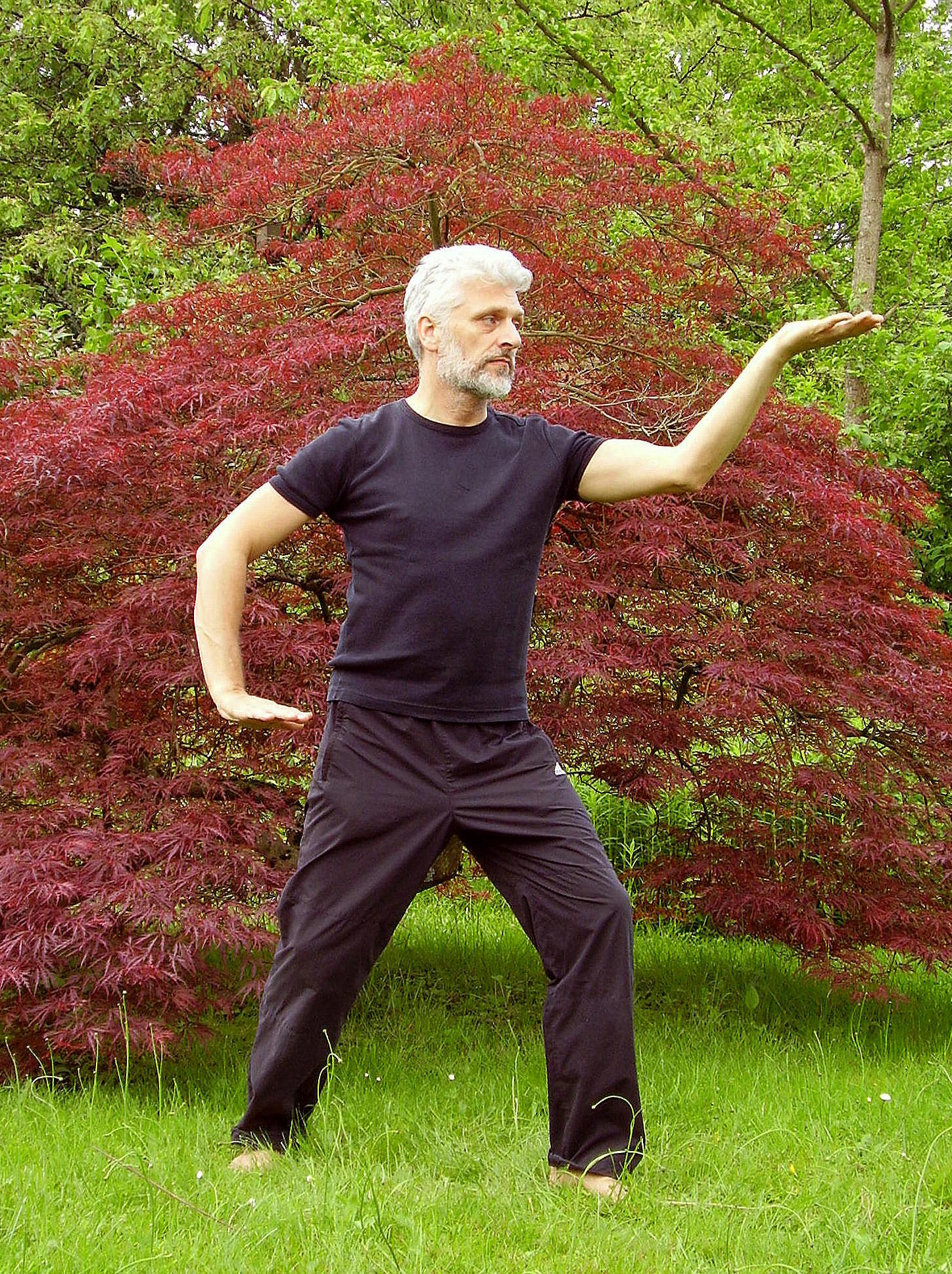
A man in dark clothing practices tai chi on grass in front of a red-leaved tree and green woodland.
Practicing tai chi outdoors, with attention to posture and the position of the hands. • Photo: Michael Raab / Wikimedia Commons, CC0 1.0.

In this system slow movement, contrary to what you might think, gives the body work to do. As weight travels from one foot toward the other, your muscles control the transfer and help keep you upright. Turning and stepping, add coordination. You are practicing the management of your moving body, a skill that matters working in the kitchen or stepping around a chair or playing on a football field. Researchers studying therapeutic tai chi have deliberately used these kinds of tasks to train balance. [2]

One particularly useful study took place in Oregon. In a 2018 randomized trial, 670 adults aged 70 or older who had fallen or had impaired mobility joined one of three exercise programs. One of the choices, a specially adapted program called Tai Ji Quan: Moving for Better Balance produced a 58 percent lower rate of falls than plain stretching exercises over 24 weeks. Participants attended two hour-long classes weekly. Note that finding concerns the rate of falls, including repeat falls, rather than a promise that any individual’s chance of falling will drop by precisely that amount. [2]

A program’s design matters. Results in improvement in one’s flexibility and balance cannot simply be guaranteed from every class or video carrying the tai chi label. A broader Cochrane review also found evidence that tai chi can help prevent falls among older adults, although certainty in how well students improved differed between how they were taught. The sensible message is encouraging, though: appropriately taught, sustained practice has real potential for a better quality of daily life. It still takes practice, and it does not make anyone immune to a slippery doorstep. [3]

Readers of a weight-management blog may reasonably wonder where the bathroom scale enters this story. There is some relevant research. A 2021 trial randomly assigned 543 adults aged 50 or older with abdominal obesity to tai chi, conventional exercise, or no exercise intervention. After 12 weeks, the reduction in waist circumference was about 1.8 centimeters greater in the tai chi group than in the control group. The conventional exercise group improved too. Regular increase in your daily exercises or physical activities are important in reaching a healthy weight. [4]

Note that this study does not establish that a brief daily routine will produce weight loss for everyone, or that tai chi selectively removes abdominal fat. For everyday planning, give it a place in your life along with satisfying, nutritious meals, adequate sleep, and other enjoyable movement. Those habits can support health synergistically, even when weight changes slowly or remains stable. [4,5]

Your first practical task is to find instructors that welcomes beginners. Ask a community center, recreation program, or local instructor about an introductory class. Before paying for a long course, ask whether you can observe or try a session. Useful questions include: Do you teach people with my level of experience? Can movements be adjusted? How do you help someone who needs support with balance? There is no single national licensing standard for tai chi instructors, so a reassuring title on a website deserves a few ordinary questions. [1,6]

Choose a small, usable practice space to practice at home. Clear away loose rugs and anything you might step into, including the dog who regards every household activity as a request for supervision. Wear clothing that allows easy movement and footwear that feels stable and does not slip. Outdoors, choose an even, dry surface. A pleasant view is a bonus; dependable footing is a priority.

For the first week, try a deliberately small plan: attend or arrange one beginner lesson, then practice a familiar movement for about five minutes on three or four other days, if comfortable. Treat that as a way to learn and establish a habit. It is a suggested starting schedule, not a research-tested dose for preventing falls or changing weight. Put it beside something already predictable in your day, such as finishing breakfast.

Use your instructor’s simplest exercise. That might involve a comfortable stance and a gentle transfer of weight while your feet remain on the floor. Let the teacher choose the range and any support you need. There is no prize for making a knee bend deeper or a step longer. If you are unsure where your weight should go, ask before adding the next movement. Learning two pieces comfortably is a perfectly respectable day’s work. Obtaining surety in the beginning movements takes time, it like learning the first notes in a musical scale, repetition and concentration takes time, but can lead to symphonies.

Let your breathing remain easy. Beginners sometimes become so occupied with remembering their hands that breathing is forgotten. Pause and reset if you catch yourself holding your breath or forcing it. Mindful movement means returning attention to the action you are doing: the pressure through your feet, the path of your hand, the next comfortable breath. It does not require an empty mind. A wandering thought about the laundry is simply a thought; have it, and then return to the shifting weight of your feet.

A Related Book


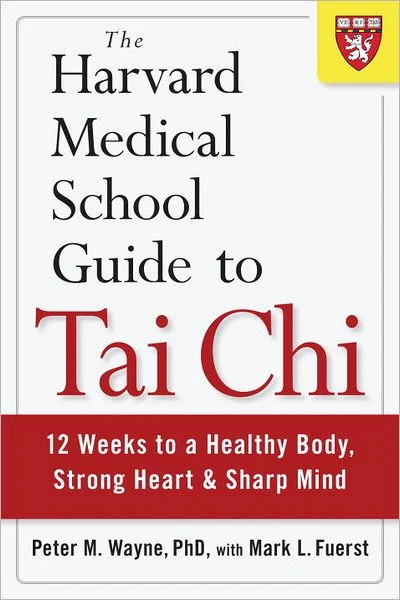
The Harvard Medical School Guide to Tai Chi: 12 Weeks to a Healthy Body, Strong Heart, and Sharp Mind by Peter Wayne and Mark L. Fuerst
Available on Barnes & Noble

This nonfiction book connects discussion of tai chi research with practical instruction, making it a relevant companion for readers interested in learning more. Use it alongside suitable instruction and individualized medical advice where needed.

During the next few weeks, repeat the same short sequence until it becomes more familiar. If you feel comfortable during practice and recover normally afterward, consider adding a few minutes with your instructor’s guidance. When the week becomes crowded, keep the appointment small enough to honor. A calendar check mark can record that you practiced. Also note discomfort or difficulties to discuss at your next lesson.

Adaptation belongs in the plan from the beginning. Tai chi movements can be modified for seated practice, and classes can accommodate different abilities. [7] Seated work changes the physical demands, so it should not be assumed to reproduce the fall-prevention benefits of a standing program. If standing balance is difficult, an instructor or physical therapist can help you choose an appropriate version and decide how to progress safely.

Keep a broader view of fitness as well. Current CDC guidance recommends at least 150 minutes of moderate-intensity aerobic activity weekly, or an equivalent amount of vigorous activity, along with muscle-strengthening activity on at least two days. Activity can be divided into smaller sessions, and some movement is better than none. Tai chi can occupy a useful place in that week alongside walking, cycling, swimming, or strength exercises suited to your abilities. [8]

Whether a particular tai chi session counts toward the aerobic target depends on how hard you are working. At moderate intensity, you generally breathe harder and can talk but would struggle to sing. A very gentle session may remain light activity. That does not make it wasted time; it means you should plan additional activity for aerobic conditioning and make room for strength work too. [9]

Tai chi is generally considered safe, but gentle movement still needs to suit the person doing it. If you have recurrent falls, a limiting joint problem, recent surgery, or medicines that make you dizzy, discuss suitable modifications with your healthcare team before beginning. Stop if a movement causes sharp pain or dizziness, and ask for guidance. An instructor should welcome information that helps your practice comfortably. [1,6]

For this week, make the goal concrete: find one suitable beginner lesson and reserve a few short practice appointments. Notice what makes returning easier – a convenient time, a patient teacher, enough room to turn. The first sequence may feel unfamiliar. Give yourself time to learn it. Tomorrow, the same small patch of floor will still be there, ready for another unhurried attempt.


The article’s health claims were checked independently against the sources below. The Barnes & Noble product listing as verified October 8, 2026.

Sources and further reading

Poetry Connection Art Nouveau Logo

A Moment of Tai Chi
Awareness of the slow shift of weight
      from one foot to another in a step
as arms curve the air
      breath enters and exits the lungs
all in harmony
      is like
a leaf forever falling in detachment
      from a stem floating
back and forth on the currents
      against gravity,
never reaching its destination as
      time and the world stop
and I am gone into everything.

©2026 Carl Scott Harker, publisher of

Time Slips Into History
by Jim Eridani


Sources checked October 8, 2026. Bracketed numbers in the article correspond to these links.

1. **NIH National Center for Complementary and Integrative Health.** [Tai Chi: What You Need To Know](https://www.nccih.nih.gov/health/tai-chi-what-you-need-to-know). Updated December 2023. General background, safety, research limitations, and instructor qualifications.

2. **Li F, Harmer P, Fitzgerald K, et al.** [Effectiveness of a Therapeutic Tai Ji Quan Intervention vs a Multimodal Exercise Intervention to Prevent Falls Among Older Adults at High Risk of Falling](https://jamanetwork.com/journals/jamainternalmedicine/fullarticle/2701631). *JAMA Internal Medicine*, 2018;178:1301–1310. Randomized Oregon trial; DOI: 10.1001/jamainternmed.2018.3915.

3. **Sherrington C, Fairhall NJ, Wallbank GK, et al.** [Exercise for preventing falls in older people living in the community](https://www.cochrane.org/evidence/CD012424_exercise-preventing-falls-older-people-living-community). Cochrane systematic review, 2019. Includes an accessible plain-language summary and separate assessments of tai chi outcomes.

4. **Siu PM, Yu AP, Chin EC, et al.** [Effects of Tai Chi or Conventional Exercise on Central Obesity in Middle-Aged and Older Adults](https://pubmed.ncbi.nlm.nih.gov/34058100/). *Annals of Internal Medicine*, 2021;174:1050–1057. Randomized trial; published online June 1, 2021. DOI: 10.7326/M20-7014. Public abstract.

5. **NIH National Institute of Diabetes and Digestive and Kidney Diseases.** [Health Tips for Adults](https://www.niddk.nih.gov/health-information/weight-management/healthy-eating-physical-activity-for-life/health-tips-for-adults). Practical guidance on eating, activity, sleep, and health.

6. **Harvard Health Publishing.** [The health benefits of tai chi](https://www.health.harvard.edu/exercise-and-fitness/the-health-benefits-of-tai-chi). April 6, 2026; reviewed by Mallika Marshall, MD. Practical guidance on beginning, choosing instruction, and adapting practice.

7. **NCCIH.** [5 Tips: What You Should Know About Tai Chi for Health](https://www.nccih.nih.gov/health/tips/tips-what-you-should-know-about-tai-chi-for-health). Includes adaptation for standing, walking, and sitting.

8. **CDC.** [Adult Activity: An Overview](https://www.cdc.gov/physical-activity-basics/guidelines/adults.html). Current public guidance on aerobic and muscle-strengthening activity.

9. **CDC.** [What Counts as Physical Activity for Adults](https://www.cdc.gov/physical-activity-basics/adding-adults/what-counts.html). Relative intensity and the talk test.

Posted on — Leave a comment

Why Coffee Changes Your Metabolic Destiny

The Mitochondrial Activation Effect: Why Coffee Changes Your Metabolic Destiny

You maybe wondering if the coffee diet works and why? This article takes a look at how coffee can help you lose weight…

The Hidden Reason the Coffee Diet Works Better Than People Expect

Most people think the coffee diet works because caffeine suppresses appetite. That’s only a small part of the story. The real mechanism — the one almost no one talks about — sits at the cellular level. It’s the mitochondria. The energy factories inside your cells that determine how efficiently your body uses fuel.

When you understand how caffeine activates these energy systems, the entire coffee-diet phenomenon starts to make sense. And once you see the mechanism, you can optimize it instead of relying on luck, hype, or inconsistent routines.

You’re about to see why certain people lose weight rapidly on the coffee diet while others feel nothing at all — and how to get on the right side of that divide.

The Power Switch Inside Your Cells

Your mitochondria determine your metabolic rate far more than most diets acknowledge. When mitochondrial activity increases, your cells burn more energy at rest — even when you’re not exercising.

Caffeine triggers this in two major ways:

    1. It increases catecholamines, which stimulate fat release. When norepinephrine rises, adipose tissue releases more fatty acids into the bloodstream. This gives your mitochondria new fuel to burn.

    2. It activates AMPK, the enzyme that signals your body to start burning stored energy. When AMPK ramps up, your cells shift from energy storage to energy use. This is the same metabolic state that fasting relies on — but caffeine reaches it faster and with fewer side effects.

This is why the coffee diet feels effortless for some people. Their mitochondria get switched “on,” and the body starts doing the heavy lifting.

Why This Creates Real Fat Loss — Not Just Stimulation

How To Make The Best Coffee At Home
Available on Amazon

Many people confuse caffeine’s alertness effect with its metabolic effect. They’re not the same. The alertness comes from the adenosine blockade, while the fat loss comes from mitochondrial activation. The difference matters.

When your mitochondria become more efficient, your baseline metabolic rate increases.

  • You burn more calories doing the same activities.
  • You produce more cellular heat.
  • You naturally move more throughout the day without trying.

This is why some people lose fat without changing anything except caffeine timing and dosage. Their energy systems shift. Their body begins to burn fuel with greater ease.

Why Movement Increases Without You Noticing
One of the most surprising effects of mitochondrial activation is spontaneous movement.

  • You take more steps.
  • You fidget more.
  • Youk stand up more often.
  • You clean, organize, and gesture more.

You don’t notice it, but your body burns significantly more calories this way. This is called NEAT — non-exercise activity thermogenesis. Caffeine increases NEAT by increasing mitochondrial efficiency. This isn’t willpower. It’s biology doing the work for you.

This is why the coffee diet succeeds even for people who dislike structured workouts.

The Right Way to Use Coffee for Metabolic Activation
The coffee diet only works when the timing aligns with your biological systems.

1. Drink coffee during your natural energy peaks.

    These usually occur between:
          => 8–10 a.m.
          => 1–3 p.m.

These are the times when cortisol and catecholamines can synergize instead of clash.

2. Keep your stomach as empty as possible during your activation window.

    => When insulin is low, mitochondria lean toward fat oxidation. Adding food too early disrupts this pathway.

3. Avoid adding sugar or high-calorie creamers.

    => They interrupt AMPK activation and push your cells back toward storage mode.

4. If you want even stronger effects, combine coffee with a short fasting window.

    => This amplifies mitochondrial efficiency without requiring strict dieting.

The coffee diet is simple, but structure matters. Random caffeine habits produce random results.

The Mistakes That Kill Mitochondrial Activation

Most people fail not because caffeine doesn’t work, but because their routine blocks the effect.

    Mistake 1. Drinking coffee before eating a high-carb breakfast. This sends insulin and glucose rising right as caffeine tries to activate AMPK. The two systems cancel each other out.

    Mistake 2. Drinking caffeine all day long. This overstimulates the nervous system, increases tolerance, and reduces mitochondrial response.

    Mistake 3. Using caffeine without any fasting window. If your insulin is always elevated, your cells never switch into fat-burning mode. Caffeine alone can’t override that.

    Mistake 4. Drinking coffee on inadequate sleep. Poor sleep reduces mitochondrial efficiency. Caffeine can’t compensate for this.

Understanding these mistakes creates a clear path to predictable results.

The Psychological Advantage Hidden Inside This Approach

When your mitochondria begin burning more energy on their own, something unexpected happens:

  • Your cravings decrease.
  • Your hunger stabilizes.
  • Your daily resistance drops.

This isn’t placebo — it’s metabolic. Your brain receives more consistent energy from fat oxidation, so dopamine and glucose swings become less extreme. As a result, the coffee diet becomes easier instead of harder over time. Most diets do the opposite.

A New Identity Around Energy and Weight Loss

When you internalize the mitochondrial activation effect, your relationship with energy changes permanently.

You stop thinking fat loss is about grinding, forcing, or restricting. You start thinking in terms of energy efficiency, cellular function, and metabolic alignment.

This shift turns weight loss from a battle into a process. You no longer rely on motivation. You rely on biology. And once you understand the biology, you can control it.

The Bottom Line

The coffee diet is not magic. It’s mitochondrial science applied in a convenient, everyday form.

Caffeine:

  • Increases catecholamines
  • Activates AMPK
  • Enhances fat oxidation
  • Raises resting metabolic rate
  • Boosts spontaneous movement
  • Reduces reward-seeking eating
  • Makes fasting easier

When used properly, the result is steady, compounding fat loss without relying on willpower. If you want even more impact, pair it with consistent fasting windows, better sleep, and a simple nutrient-dense eating pattern. Your body will take it from there.

Coffee and Javaburn, Check it Out => Click Here!


News about Coffee Diet

Posted on — Leave a comment

Health Value of a Scale

Top Health Benefits to Using a Scale

Using a scale regularly can offer several health benefits, helping individuals manage their wellness and maintain healthier lifestyles. Here are some of the top benefits:

1. Weight Management

Tracking Progress: Regularly using a scale allows you to monitor weight changes and track progress toward health goals, such as weight loss or muscle gain.
Accountability: Stepping on the scale frequently can help you stay accountable to your diet and exercise routines.

2. Early Detection of Changes

Rapid changes in weight may indicate underlying health issues (e.g., water retention, hormonal changes) that could warrant medical attention.

3. Motivation and Feedback

Seeing gradual changes, whether losing or maintaining weight, can boost motivation and encourage positive behavior reinforcement.
It provides tangible feedback, helping you understand the impact of daily habits on body weight.

4. Helps with Portion Control and Eating Habits

Regular weighing can reinforce mindful eating habits by making you more aware of how food choices impact your weight.

5. Supports Fitness Goals

Whether aiming to increase muscle mass or decrease body fat, tracking weight changes can help evaluate if your fitness routine is effective.

6. Prevention of Weight Gain

Studies have shown that consistent self-weighing can help prevent unwanted weight gain over time.

7. Promotes Self-Awareness

Understanding your weight trends and how they relate to other aspects of health can cultivate a better sense of overall well-being.

Note: While scales are helpful, it’s important to use them in context with other health indicators, such as body composition, energy levels, and how you feel overall. Weight is one metric in a larger health picture!

==> Looking for a new scale?

I recently purchased the AccuCheck Digital Body Weight Bathroom Scale from Greater Goods Technology and have been very impressed with its performance. As someone who is health-conscious and likes to keep track of my weight, this scale has been a valuable addition to my daily routine.

The AccuCheck Digital Body Weight Bathroom Scale is a sleek and modern scale that offers high accuracy in measuring weight up to 400 pounds. It features an easy-to-read backlit display that shows your weight in both pounds and kilograms, making it convenient for users all around the world. The scale is equipped with step-on technology, so there is no need to tap or power on the device before use. It also has an auto-calibration function that ensures accurate readings every time.


AccuCheck Digital Body Weight
Bathroom Scale
Available on Amazon

Pros:
– High accuracy in measuring weight
– Easy-to-read backlit display
– Step-on technology for convenience
– Auto-calibration function for accurate readings

Cons:
– Some users may find the scale too sensitive to slight movements

Unique Features:
– Can measure weight up to 400 pounds
– Displays weight in both pounds and kilograms
– Sleek and modern design

In conclusion, the AccuCheck Digital Body Weight Bathroom Scale from Greater Goods Technology is a top-quality product that I highly recommend to anyone looking for a reliable and accurate bathroom scale. Its high accuracy, easy-to-read display, and convenient features make it a great addition to any home. I am very happy with my purchase and will continue to use this scale for years to come.

To purchase this product, visit: Digital Body Weight Bathroom Scale

Posted on — Leave a comment

Weight Loss with Java Burn?

Java Burn is a revolutionary weight loss supplement that has been making waves in the health and fitness industry. This product is a unique blend of natural ingredients designed to boost metabolism and promote fat burning. It comes in the form of a powder that can be easily mixed with your morning coffee, making it an effortless addition to your daily routine.

The key features of Java Burn include:

– A proprietary blend of natural ingredients known for their weight loss properties.
– Easy-to-use format that can be mixed with your morning coffee.
– Designed to boost metabolism and promote fat burning.
– Suitable for both men and women.
– Non-GMO, gluten-free, and vegan-friendly.

The pros of using Java Burn are:

– It’s easy to incorporate into your daily routine.
– It’s made from natural ingredients, reducing the risk of side effects.
– It boosts metabolism, which can help increase energy levels throughout the day.
– It promotes fat burning, aiding in weight loss efforts.

Java Burn works by enhancing your body’s metabolic rate. The unique blend of natural ingredients works synergistically to stimulate thermogenesis – a process where your body burns calories to produce heat. This not only helps you shed unwanted pounds but also gives you an energy boost. Moreover, Java Burn is designed to curb cravings and suppress appetite, which can further aid in weight management.

Another significant benefit of Java Burn is its potential impact on mental clarity and focus. Some users have reported feeling more alert and focused throughout the day after using this product. This could be attributed to the metabolic boost that it provides, leading to increased energy levels.

Java Burn also stands out for its ease of use. Unlike many other weight loss supplements that require strict dosing schedules or dietary restrictions, Java Burn can be easily incorporated into any lifestyle. Simply mix it with your morning coffee and you’re good to go.

In conclusion, Java Burn is a promising product for anyone looking to enhance their weight loss efforts. Its unique blend of natural ingredients, combined with its easy-to-use format, makes it a convenient and effective solution for weight management. However, as with any supplement, results may vary from person to person. It’s always recommended to consult with a healthcare professional before starting any new supplement regimen.

Overall, Java Burn offers a novel approach to weight loss that many users will find appealing. Its ability to boost metabolism and promote fat burning can potentially lead to significant weight loss over time. Furthermore, the added benefits of increased energy levels and improved mental clarity make it an attractive option for those looking to improve their overall health and well-being.