Don’t Let a Tired Brain Go Grocery Shopping: How Sleep Shapes Appetite

At 10:30 at night, does your kitchen call to you? The crackers with a little peanut butter look appealing. The leftover pie, is winking, just a sliver would be okay… You may not be physically ravenous, yet you are tired, still awake, and standing three steps from food that that would be easy to eat, in the moment.
Fatigue can lead to poor decisions. Although not every evening snack is a mistake, being sleepy and tired does make it easier to add more calories than you want take in each day. This why the subject of sleep belongs in a sensible discussion about appetite and weight. Eating is influenced by biology, habit, opportunity, stress, food availability, and pleasure. Sleep, or lack thereof, can nudge several of those urges at once.
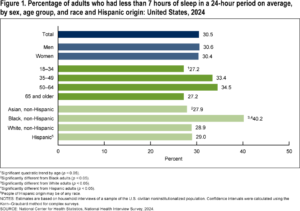
Being short on sleep is hardly a rare problem. In the 2024 National Health Interview Survey, 30.5 percent of U.S. adults reported sleeping less than seven hours in an average 24-hour period. The American Academy of Sleep Medicine recommends at least seven hours for adults, although individual needs and the ranges commonly given to different age groups vary. Sleep quality matters too: seven hours broken into a collection of small, unsatisfactory installments may not leave a person refreshed. The National Center for Health Statistics reported these findings in April 2026.
What happens to appetite when sleep is shortened? Experimental studies give us more useful evidence than anecdotal observation that tired people and weight gain often go together. A 2019 review combined 41 randomized trials in which researchers restricted sleep and measured metabolic outcomes. On average, sleep restriction increased reported hunger by 13.4 points on a 100-point scale and energy intake by about 253 calories per day. The experiments also found altered brain responses to food cues, while changes in the appetite-related hormones leptin and ghrelin were not consistent. The review appeared in “Sleep Medicine Reviews”.
That last detail is important. Why less sleep causes people to eat more is not a sikmple mechanism of two hormones.
while popular explanations often introduce ghrelin as the hunger hormone, leptin as the fullness hormone, and then announce that a bad night simply turns one up and the other down, studies do not support this theory. Those hormones are real, but the human appetite system is not a pair of faucet handles. A 2026 synthesis of randomized human studies found that people often ate more after sleep restriction without corresponding increases in reported appetite or motivation to eat. In other words, the extra food cannot be, generally explained by feeling noticeably hungrier. The authors urged a broader view of the pathways involved.
Consider the ordinary causes of food gains when sleep loses. Being awake longer creates more time in which to eat. Fatigue can make planning, cooking, and resisting an easy impulse more difficult. Food rewards may attract more attention, and a tired person may reach for quick energy or comfort foods. Then there is the following morning, when a sluggish brain from lack of sleep decides against a healthy breakfast and the rest of the day your body is demanding balance through overeating. The automatic systems of our bodies are complicated and getting enough sleep each day makes it easier for those systems to stay in balance with the bodies actual needs.
 The Sleep Prescription: Seven Days to Unlocking Your Best Rest by Aric A. Prather, PhD Available on Barnes & Noble This book presents a short, approachable program for improving sleep habits. It is a useful companion for readers who want to work on sleep itself. |
Researchers have also asked this practical question: If short sleepers sleep longer, do they eat differently? It seems so. In a 2022 randomized trial studied 80 adults aged 21 to 40 who were overweight and usually slept less than 6.5 hours who did not have a prescribed diet or exercise plan. Half of these individuals received sleep-hygiene counseling intended to lengthen sleep. Over the two-week trial, that group slept about 1.2 hours longer per night and consumed an estimated 270 fewer calories per day than the control group. Energy intake was measured with an objective method using doubly labeled water and changes in body energy stores, not merely a food diary. The trial was published in “JAMA Internal Medicine”.
It is an intriguing result. Note that the trial was short, took place at one center, and involved a specific group of younger adults with who were short sleeping and overweight. It does not show that every additional hour of sleep erases a fixed number of calories, nor that sleeping late on Sunday cancels a week of short nights.
Other studies do support the notion that getting a longer good night sleep helps one to maintain a healthy weight. A 2026 systematic review found that behavioral sleep interventions reduced daily energy intake across five small studies. These particular sleep-extension studies did not produce a statistically significant average change in BMI, however. The review concluded that sleep care may complement, not replace, established health strategies.
The practical lesson is refreshingly obvious: treat sleep as one part of the eating environment. Do not sell the mattress and buy a smaller dinner plate, or vice versa. Regular meals, nutritious food, physical activity, medical care when needed, and sufficient sleep are all components of a healthier life.
Begin with a one-week observation rather than a sweeping reform. Each morning, record roughly when you went to bed, when you got up, whether you woke repeatedly, and how rested you feel. During the day, note unusually strong hunger, cravings, unplanned grazing, and the time they occurred. This is not a calorie ledger and should not become a source of anxiety. Its purpose is to reveal patterns: perhaps the snack cupboard becomes magnetic after nights when work stretches past midnight, or perhaps appetite is unchanged but takeout becomes more appealing because cooking feels impossible.
Next, protect a realistic sleep opportunity. Choose a reasonably consistent wake time, then work backward far enough to allow the amount of sleep you need, plus a little time to settle. For many adults, seven or more hours is an appropriate starting point. If bedtime has been very late, move it earlier by 15 or 30 minutes rather than attempting a heroic two-hour leap that ends with you staring at the ceiling and resenting the clock.
Create a cue to begin winding down. An evening alarm can be more useful than a morning alarm because it catches the decision before the next episode, chore, or internet rabbit hole begins. The CDC recommends keeping the bedroom quiet, relaxing, and cool; maintaining regular bed and wake times; turning off electronic devices at least 30 minutes before bed; avoiding large meals and alcohol before bedtime; and avoiding caffeine in the afternoon or evening. These are experiments, not moral commandments. A neighbor’s dog may not recognize your new sleep program, but the parts you control still count. [CDC summarizes these healthy-sleep habits here.](https://www.cdc.gov/sleep/about/index.html)
 Sleeping I love dreaming I don’t like getting up to pee, but one must, sometimes, I don’t like having a tired brain. Often I read before bedtime, The worried brain makes it harder The day dawns, body and brain ready, ©2026 Carl Scott Harker, publisher of 
Time Slips Into History |
After a short night, make food decisions easier rather than trying to punish yourself into virtue. Eat regular, satisfying meals. Include protein- and fiber-rich foods you tolerate, and keep convenient options available: yogurt and fruit, peanut butter and whole-grain toast, soup and beans, or another combination that fits your preferences and medical needs. Pre-deciding lunch before the busiest part of the day can help when the tired brain would prefer that a cookie or a donut instead of an apple, salad and soup. If you are genuinely hungry for an evening snack, have one; the goal is to notice and support appetite, not to fear it.
Some barriers can be difficult to overcome. Shift work, caregiving, pain, menopause symptoms, noisy housing, and multiple jobs can all limit sleep. Adjust what is feasible and resist turning a structural problem into a character judgement. People who work nights may benefit from a dark, quiet daytime sleep space and professional guidance tailored to their schedule. Anyone taking a medicine or supplement for sleep should discuss benefits, side effects, and interactions with a clinician or pharmacist rather than assuming that “natural” means harmless.
Persistent sleep trouble deserves attention. Loud frequent snoring, breathing that stops and starts, gasping during sleep, morning headaches, or marked daytime sleepiness can be signs of sleep apnea. Regular difficulty falling or staying asleep may need evaluation as well. Do not drive when dangerously sleepy. A healthcare professional can look for sleep disorders and discuss effective treatment; more willpower at breakfast cannot correct an airway that repeatedly closes at night. The National Heart, Lung, and Blood Institute lists sleep-apnea symptoms and evaluation guidance.
For the coming week, choose one modest change: begin winding down 20 minutes earlier, set a consistent wake time, move afternoon caffeine earlier, or keep the brief sleep-and-appetite record. At week’s end, ask whether the change improved rest, made food decisions easier, or revealed a problem worth discussing with a professional. Sleep is not a secret diet. It is a basic biological need. A rested brain is a more patient companion for making good decisions in the kitchen.
Sources and further reading, checked October 22, 2026
– Ng, Black, and Adjaye-Gbewonyo: Short Sleep Duration and Sleep Difficulties Among Adults—United States, 2024, NCHS Data Brief No. 559, April 2026.
– CDC: About Sleep, May 15, 2024.
– Tasali and colleagues: Effect of Sleep Extension on Objectively Assessed Energy Intake, randomized clinical trial, *JAMA Internal Medicine*, 2022.
– Zhu and colleagues: Effects of Sleep Restriction on Metabolism-Related Parameters, systematic review and meta-analysis of randomized trials, *Sleep Medicine Reviews*, 2019.
– Does Sleep Curtailment Stimulate Appetite, Motivation to Eat and Dietary Intake in Humans?, systematic narrative synthesis of randomized human trials, 2026.
– Mostafa and colleagues: The Effect of Behavioral Sleep Interventions on Measures of Obesity, Dietary Intake and Physical Activity, systematic review and meta-analysis, *Obesity Reviews*, 2026.
– NHLBI: Sleep Apnea Symptoms.