Tai Chi for Beginners: Slow Moves, Steadier Days
Tai chi for beginners—sequences, breathing, and mindful movement.
Imagine arriving at an exercise class where nobody urges you to beat yesterday’s record. The instructor asks you to soften your shoulders, shift your weight, and pay attention to your feet. Somewhere outside, a car alarm is conducting its own less peaceful exercise program. But inside, you have one manageable job: notice how you move. For someone trying to become more active, that is an inviting beginning.
Tai chi originally developed as a Chinese martial art, but is now a world-wide-physical well being system. Tai chi health-focused classes teach linked movements performed slowly, with attention to posture, breathing, and concentration. A “form” simply means an arranged sequence of movements. You learn the pieces, then how they fit together. There is no requirement to arrive flexible, athletic, or already serene. So few of us are serene and becoming so is a major attraction of tai chi. [1]
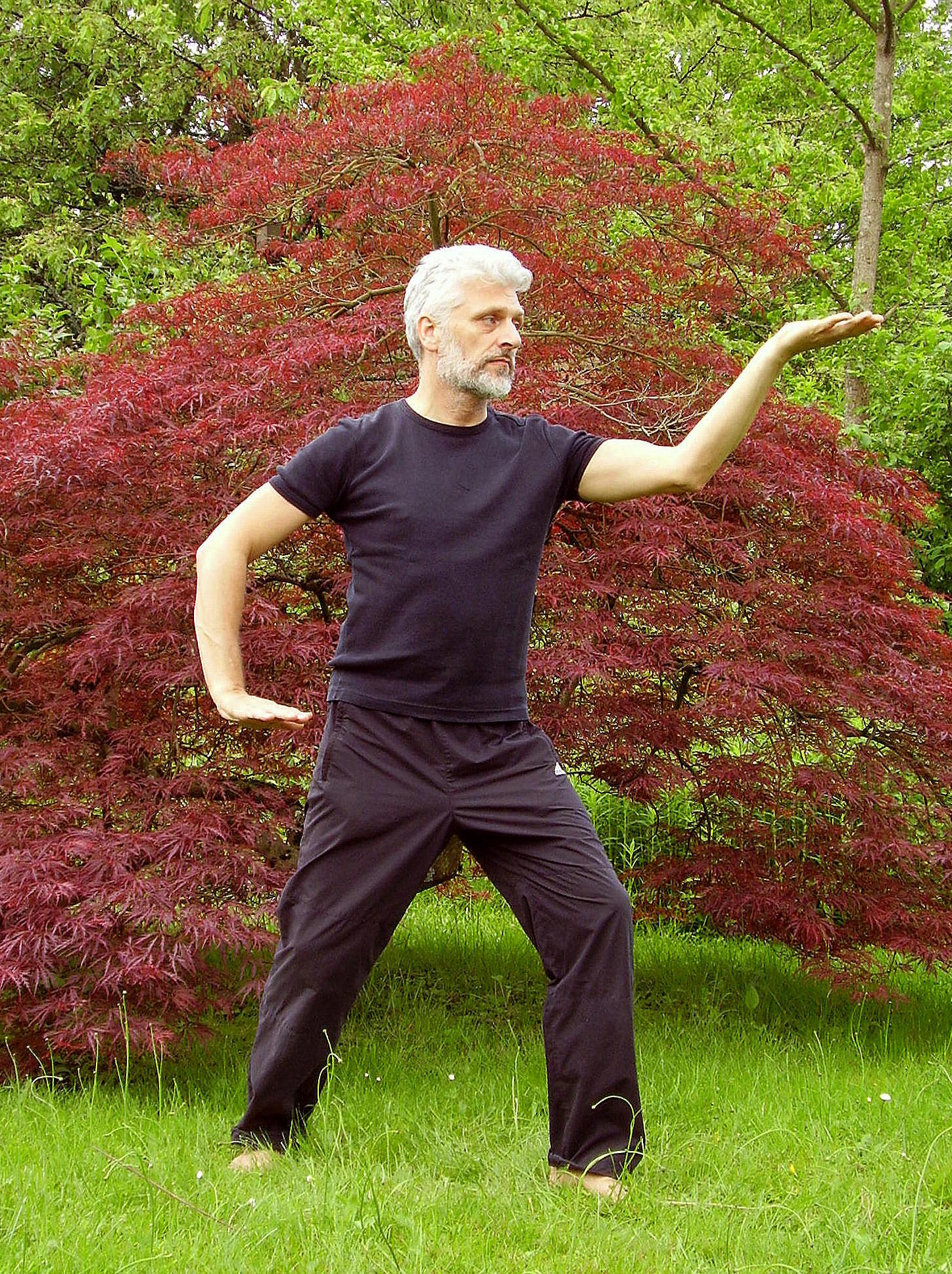
In this system slow movement, contrary to what you might think, gives the body work to do. As weight travels from one foot toward the other, your muscles control the transfer and help keep you upright. Turning and stepping, add coordination. You are practicing the management of your moving body, a skill that matters working in the kitchen or stepping around a chair or playing on a football field. Researchers studying therapeutic tai chi have deliberately used these kinds of tasks to train balance. [2]
One particularly useful study took place in Oregon. In a 2018 randomized trial, 670 adults aged 70 or older who had fallen or had impaired mobility joined one of three exercise programs. One of the choices, a specially adapted program called Tai Ji Quan: Moving for Better Balance produced a 58 percent lower rate of falls than plain stretching exercises over 24 weeks. Participants attended two hour-long classes weekly. Note that finding concerns the rate of falls, including repeat falls, rather than a promise that any individual’s chance of falling will drop by precisely that amount. [2]
A program’s design matters. Results in improvement in one’s flexibility and balance cannot simply be guaranteed from every class or video carrying the tai chi label. A broader Cochrane review also found evidence that tai chi can help prevent falls among older adults, although certainty in how well students improved differed between how they were taught. The sensible message is encouraging, though: appropriately taught, sustained practice has real potential for a better quality of daily life. It still takes practice, and it does not make anyone immune to a slippery doorstep. [3]
Readers of a weight-management blog may reasonably wonder where the bathroom scale enters this story. There is some relevant research. A 2021 trial randomly assigned 543 adults aged 50 or older with abdominal obesity to tai chi, conventional exercise, or no exercise intervention. After 12 weeks, the reduction in waist circumference was about 1.8 centimeters greater in the tai chi group than in the control group. The conventional exercise group improved too. Regular increase in your daily exercises or physical activities are important in reaching a healthy weight. [4]
Note that this study does not establish that a brief daily routine will produce weight loss for everyone, or that tai chi selectively removes abdominal fat. For everyday planning, give it a place in your life along with satisfying, nutritious meals, adequate sleep, and other enjoyable movement. Those habits can support health synergistically, even when weight changes slowly or remains stable. [4,5]
Your first practical task is to find instructors that welcomes beginners. Ask a community center, recreation program, or local instructor about an introductory class. Before paying for a long course, ask whether you can observe or try a session. Useful questions include: Do you teach people with my level of experience? Can movements be adjusted? How do you help someone who needs support with balance? There is no single national licensing standard for tai chi instructors, so a reassuring title on a website deserves a few ordinary questions. [1,6]
Choose a small, usable practice space to practice at home. Clear away loose rugs and anything you might step into, including the dog who regards every household activity as a request for supervision. Wear clothing that allows easy movement and footwear that feels stable and does not slip. Outdoors, choose an even, dry surface. A pleasant view is a bonus; dependable footing is a priority.
For the first week, try a deliberately small plan: attend or arrange one beginner lesson, then practice a familiar movement for about five minutes on three or four other days, if comfortable. Treat that as a way to learn and establish a habit. It is a suggested starting schedule, not a research-tested dose for preventing falls or changing weight. Put it beside something already predictable in your day, such as finishing breakfast.
Use your instructor’s simplest exercise. That might involve a comfortable stance and a gentle transfer of weight while your feet remain on the floor. Let the teacher choose the range and any support you need. There is no prize for making a knee bend deeper or a step longer. If you are unsure where your weight should go, ask before adding the next movement. Learning two pieces comfortably is a perfectly respectable day’s work. Obtaining surety in the beginning movements takes time, it like learning the first notes in a musical scale, repetition and concentration takes time, but can lead to symphonies.
Let your breathing remain easy. Beginners sometimes become so occupied with remembering their hands that breathing is forgotten. Pause and reset if you catch yourself holding your breath or forcing it. Mindful movement means returning attention to the action you are doing: the pressure through your feet, the path of your hand, the next comfortable breath. It does not require an empty mind. A wandering thought about the laundry is simply a thought; have it, and then return to the shifting weight of your feet.
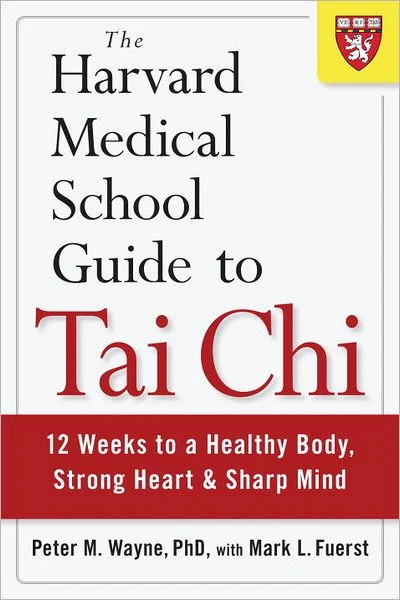 The Harvard Medical School Guide to Tai Chi: 12 Weeks to a Healthy Body, Strong Heart, and Sharp Mind by Peter Wayne and Mark L. Fuerst Available on Barnes & Noble This nonfiction book connects discussion of tai chi research with practical instruction, making it a relevant companion for readers interested in learning more. Use it alongside suitable instruction and individualized medical advice where needed. |
During the next few weeks, repeat the same short sequence until it becomes more familiar. If you feel comfortable during practice and recover normally afterward, consider adding a few minutes with your instructor’s guidance. When the week becomes crowded, keep the appointment small enough to honor. A calendar check mark can record that you practiced. Also note discomfort or difficulties to discuss at your next lesson.
Adaptation belongs in the plan from the beginning. Tai chi movements can be modified for seated practice, and classes can accommodate different abilities. [7] Seated work changes the physical demands, so it should not be assumed to reproduce the fall-prevention benefits of a standing program. If standing balance is difficult, an instructor or physical therapist can help you choose an appropriate version and decide how to progress safely.
Keep a broader view of fitness as well. Current CDC guidance recommends at least 150 minutes of moderate-intensity aerobic activity weekly, or an equivalent amount of vigorous activity, along with muscle-strengthening activity on at least two days. Activity can be divided into smaller sessions, and some movement is better than none. Tai chi can occupy a useful place in that week alongside walking, cycling, swimming, or strength exercises suited to your abilities. [8]
Whether a particular tai chi session counts toward the aerobic target depends on how hard you are working. At moderate intensity, you generally breathe harder and can talk but would struggle to sing. A very gentle session may remain light activity. That does not make it wasted time; it means you should plan additional activity for aerobic conditioning and make room for strength work too. [9]
Tai chi is generally considered safe, but gentle movement still needs to suit the person doing it. If you have recurrent falls, a limiting joint problem, recent surgery, or medicines that make you dizzy, discuss suitable modifications with your healthcare team before beginning. Stop if a movement causes sharp pain or dizziness, and ask for guidance. An instructor should welcome information that helps your practice comfortably. [1,6]
For this week, make the goal concrete: find one suitable beginner lesson and reserve a few short practice appointments. Notice what makes returning easier – a convenient time, a patient teacher, enough room to turn. The first sequence may feel unfamiliar. Give yourself time to learn it. Tomorrow, the same small patch of floor will still be there, ready for another unhurried attempt.
The article’s health claims were checked independently against the sources below. The Barnes & Noble product listing as verified October 8, 2026.
Sources and further reading
 A Moment of Tai Chi from one foot to another in a step as arms curve the air breath enters and exits the lungs all in harmony is like a leaf forever falling in detachment from a stem floating back and forth on the currents against gravity, never reaching its destination as time and the world stop and I am gone into everything. ©2026 Carl Scott Harker, publisher of 
Time Slips Into History |
Sources checked October 8, 2026. Bracketed numbers in the article correspond to these links.
1. **NIH National Center for Complementary and Integrative Health.** [Tai Chi: What You Need To Know](https://www.nccih.nih.gov/health/tai-chi-what-you-need-to-know). Updated December 2023. General background, safety, research limitations, and instructor qualifications.
2. **Li F, Harmer P, Fitzgerald K, et al.** [Effectiveness of a Therapeutic Tai Ji Quan Intervention vs a Multimodal Exercise Intervention to Prevent Falls Among Older Adults at High Risk of Falling](https://jamanetwork.com/journals/jamainternalmedicine/fullarticle/2701631). *JAMA Internal Medicine*, 2018;178:1301–1310. Randomized Oregon trial; DOI: 10.1001/jamainternmed.2018.3915.
3. **Sherrington C, Fairhall NJ, Wallbank GK, et al.** [Exercise for preventing falls in older people living in the community](https://www.cochrane.org/evidence/CD012424_exercise-preventing-falls-older-people-living-community). Cochrane systematic review, 2019. Includes an accessible plain-language summary and separate assessments of tai chi outcomes.
4. **Siu PM, Yu AP, Chin EC, et al.** [Effects of Tai Chi or Conventional Exercise on Central Obesity in Middle-Aged and Older Adults](https://pubmed.ncbi.nlm.nih.gov/34058100/). *Annals of Internal Medicine*, 2021;174:1050–1057. Randomized trial; published online June 1, 2021. DOI: 10.7326/M20-7014. Public abstract.
5. **NIH National Institute of Diabetes and Digestive and Kidney Diseases.** [Health Tips for Adults](https://www.niddk.nih.gov/health-information/weight-management/healthy-eating-physical-activity-for-life/health-tips-for-adults). Practical guidance on eating, activity, sleep, and health.
6. **Harvard Health Publishing.** [The health benefits of tai chi](https://www.health.harvard.edu/exercise-and-fitness/the-health-benefits-of-tai-chi). April 6, 2026; reviewed by Mallika Marshall, MD. Practical guidance on beginning, choosing instruction, and adapting practice.
7. **NCCIH.** [5 Tips: What You Should Know About Tai Chi for Health](https://www.nccih.nih.gov/health/tips/tips-what-you-should-know-about-tai-chi-for-health). Includes adaptation for standing, walking, and sitting.
8. **CDC.** [Adult Activity: An Overview](https://www.cdc.gov/physical-activity-basics/guidelines/adults.html). Current public guidance on aerobic and muscle-strengthening activity.
9. **CDC.** [What Counts as Physical Activity for Adults](https://www.cdc.gov/physical-activity-basics/adding-adults/what-counts.html). Relative intensity and the talk test.